Palm Coast Waterfront Home Checklist Before You Offer
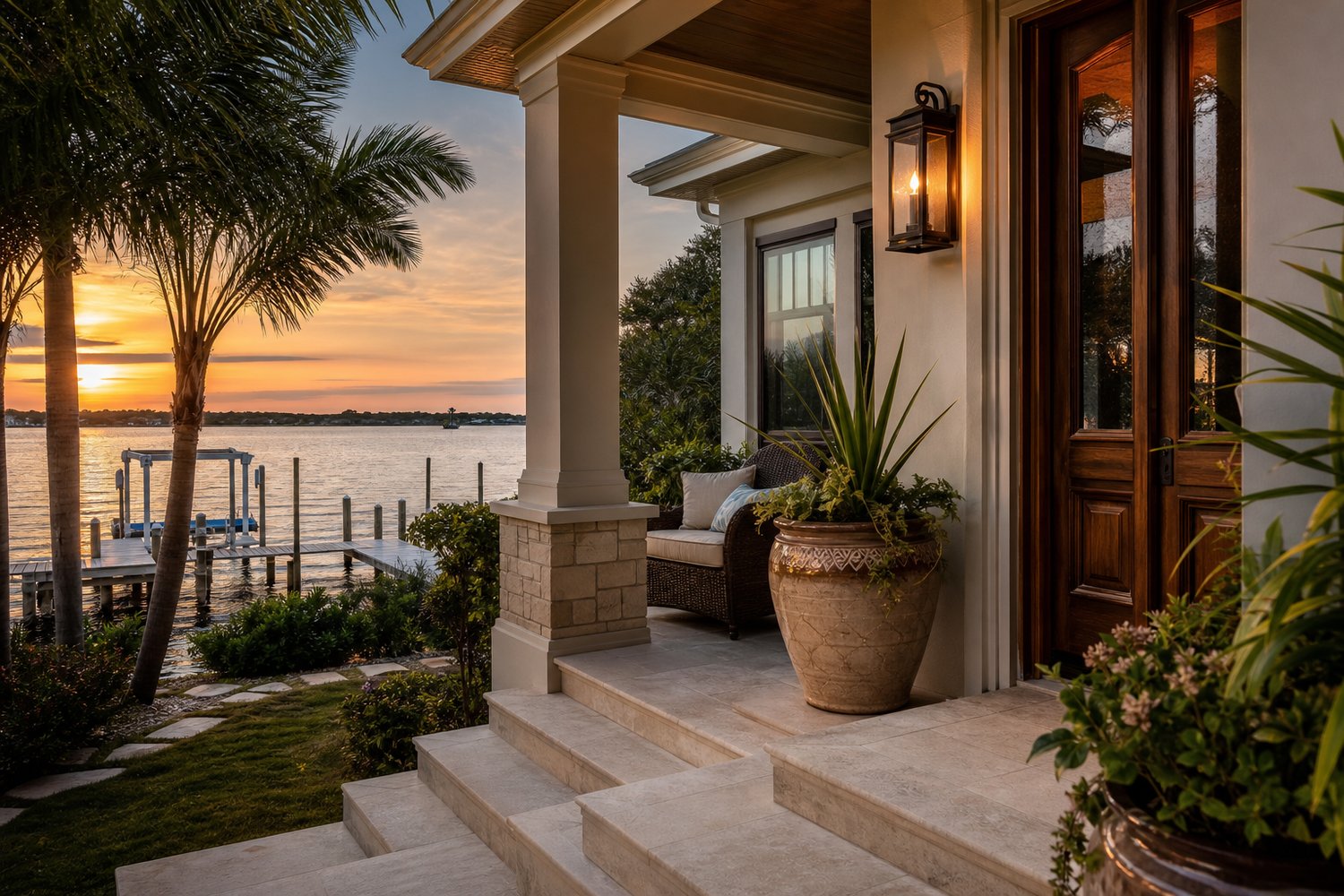
Before you fall for the view, pull the parcel number and verify four things: the flood zone, an insurance quote, the condition of the seawall and dock, and whether the water actually connects to where you want to boat. I'd get those answers before the offer, not after.
What should I check before buying a Palm Coast waterfront home?
Before you buy a Palm Coast waterfront home, verify the parcel's flood zone, get flood and homeowners insurance indications, hire specialists to inspect the seawall and dock, and confirm the water access is real. The listing's "waterfront" label doesn't prove legal access, navigability, or who owns the shoreline. A parcel-level review is what separates a good canal-front purchase from an expensive surprise.
Key Takeaways
- Flagler County says standard homeowners policies do not cover flood damage, and NFIP flood coverage generally carries a 30-day waiting period before it takes effect.
- A home with a federally backed mortgage in a high-risk flood zone must carry flood insurance, so confirm the zone and your lender's requirements before your inspection or financing deadline.
- Across July through September 2026 sales of all home types, the median sale price was $1,024,713 in Ocean Hammock (22 sales) and $1,044,657 in Hammock Dunes (16 sales).
- A standard home inspection doesn't establish the remaining life of a seawall, bulkhead, dock, or boat lift, so budget time for a marine contractor or structural engineer.
- Zone X is a lower-risk FEMA category, not a no-risk one, and your insurer may price the home on elevation, claims history, and construction rather than the map alone.
I walk my clients through this exact sequence before we write an offer, because the view is the easy part. The expensive questions are underneath it: what the water does in a storm, what the shoreline structures cost to keep standing, and whether you can actually take a boat out of your backyard.
How do I check flood zone, flood insurance, and elevation on a Palm Coast waterfront home?
Start with the street address and parcel ID, then confirm the flood zone through the county and city tools, and get insurance indications before you're locked into a contract. Don't rely on the listing or a neighbor's experience, because flood status is parcel-specific.
Pull the parcel's flood zone from official sources
Flagler County directs owners to review the parcel through the Flagler County Property Appraiser and activate the FEMA FIRM layer. The county's Flood Zone Information page also points to FEMA's official Map Service Center for flood maps.
The City of Palm Coast publishes its own Flood Insurance Rate Maps resource. Maps can be amended, so ask whether any letter of map change or property-specific determination affects the parcel you're considering.
Palm Coast also offers a flood-preparedness process that includes a letter of determination. Per the city's Flood Preparedness page, that letter identifies the flood zone of the property and structure using current FEMA flood insurance rate maps.
In Flagler Beach, the city says its certified floodplain manager can provide a determination for a specific address or parcel number, handled through the Engineering Department. Details are on the city's FIRMs and Floodplains page.
Understand what a lower-risk zone does and doesn't mean
Flagler County describes Zone X as a lower or moderate-risk category but cautions that flood risk can still exist outside high-risk zones. Flood insurance may not be mandatory there, but your lender and insurer make the final call for the specific property, per the same county flood zone resource.
If you're financing with a federally backed mortgage and the home sits in a high-risk zone, flood insurance is required. Confirm that before your financing deadline, not at the closing table.
Get insurance indications before you commit
Flagler County states that standard homeowners policies do not cover flood damage, and that NFIP coverage generally has a 30-day waiting period, subject to policy exceptions. Waiting until after closing to sort out flood coverage can leave a gap, so I ask clients to line up quotes early.
Ask your insurance agent to quote both homeowners and flood coverage using the address, construction details, elevation information, roof age, prior claims, and any seawall or dock features. Your pricing won't come from the FEMA map alone. Insurers may also weigh elevation, distance to water, construction type, prior losses, mitigation features, replacement cost, and wind exposure.
Compare the structure to the base flood elevation
Compare the home's lowest floor and mechanical equipment (air handler, electrical panel, water heater) with the applicable base flood elevation. Look for low entry points, below-grade areas, and enclosed spaces beneath elevated construction. Also check the access road, because a street can become impassable before the house itself floods.
An elevation certificate, if one exists, is worth requesting. I'll help you ask the seller for it and for any floodproofing or mitigation documentation.
What should I inspect on a Palm Coast waterfront home beyond the standard inspection?
Add waterfront-specific evaluations to your standard inspection: the seawall or bulkhead, dock, pilings, boat lift, shoreline, drainage, and signs of past water intrusion. A general home inspection doesn't necessarily tell you how many years a marine structure has left.
Seawall, bulkhead, dock, and boat lift
These are the items that turn a "great deal" into a large repair project. A marine contractor, structural engineer, or other qualified professional may be needed to assess them.
- Seawall or bulkhead: cracks, leaning, soil loss or sinkholes behind the wall, and signs of washout at the base.
- Dock and pilings: rot, corrosion, loose decking, and condition of electrical and water hookups.
- Boat lift: age, motor and cable condition, and whether it's included in the sale.
- Retaining structures and drainage: how water moves across the lot during heavy rain.
The house itself, with water in mind
Have your inspector look closely at the roof and storm openings, electrical equipment near water, crawl spaces, and any evidence of prior flood intrusion such as staining, repairs at the base of walls, or replaced lower drywall. Salt air matters too. Oceanfront and intracoastal settings in Flagler Beach tend to be harder on metal, fasteners, and mechanical equipment than a freshwater canal setting.
Records that tell the story
Request these before the offer or during your due diligence window:
- Prior flood claims and insurance-loss history where available
- Elevation certificates and any floodproofing or mitigation documentation
- Permits and final inspections for the seawall, dock, and any additions
- Surveys, easements, and maintenance agreements
- Repair records after hurricanes or major storms
Then confirm that what you can see on the property matches what was permitted. An unpermitted dock or seawall repair is a problem you'd inherit.
| What to check | Where to verify it | Why it matters |
|---|---|---|
| Flood zone | Property Appraiser FIRM layer, FEMA Map Service Center, city determination | Drives lender requirements and insurance |
| Flood insurance quote | Insurance agent | The NFIP waiting period makes timing important |
| Seawall and dock condition | Marine contractor or structural engineer | Standard inspections may not cover remaining service life |
| Permits and final inspections | Seller records, city or county records | Confirms improvements match what was approved |
| Shoreline and water rights | Survey and title work | Clarifies ownership, maintenance duties, and access |
| Navigable connection | Site visit at low tide, local boaters | A canal view doesn't guarantee boat passage |
How do I confirm the water access and shoreline rights are real?
Verify the exact water body, whether it connects to the Intracoastal Waterway, and who owns and maintains the shoreline. "Waterfront" on a listing doesn't establish legal water access, navigability, seawall ownership, or dock rights.
Canal-front properties in Palm Coast
A canal-front house may face a freshwater canal, a saltwater canal, a drainage feature, or a waterway with limited or no navigable connection. Those differ in maintenance and in what they can do for your boating plans.
Confirm whether the canal connects to the Intracoastal Waterway and whether a boat can physically pass at normal and low tides. Check for bridges, culverts, easements, or maintained channels that restrict access. If boating is the point of buying a Palm Coast waterfront home, I'll often suggest a low-tide visit and a conversation with someone who boats that canal.
Flagler Beach: oceanfront, intracoastal, lagoon, and canal exposure
These settings carry different mixes of erosion, storm surge, wave action, salt-air corrosion, dune, and access issues. The city notes that primary frontal dunes and coastal areas may face inundation plus storm-induced velocity-wave hazards, with base flood elevations set through detailed coastal hydraulic analyses (see the city's floodplain information). That makes a property-specific determination especially valuable at the beach.
For broader context on that market, see my Flagler Beach real estate market overview.
Who owns the shoreline?
Treat the shoreline as both an asset and a liability. Determine who owns the submerged land or shoreline area, who maintains it, whether the water boundary has shifted, and whether the parcel includes riparian rights or only an informal view or access arrangement. Survey, title, permitting, and environmental review may be needed to answer those questions. Your closing agent can help with title work, and I'll coordinate the rest so nothing is left until the last week.
How do prices look in the Hammock communities?
Recent closed sales in Ocean Hammock and Hammock Dunes landed above $1 million at the median. The table below covers all home types sold July through September 2026, not only waterfront homes, so treat it as a market reference rather than a price for any one property.
| Area | Median Sale Price | Homes Sold |
|---|---|---|
| ocean hammock | $1,024,713 | 22 |
| hammock dunes | $1,044,657 | 16 |
Your specific number depends on the home's condition, the state of its shoreline structures, its elevation, and its water access. That's where a parcel-level review and a local comparison come in, and it's exactly what I walk my clients through before we make an offer.
If you're serious about a Palm Coast waterfront home, line up the flood determination, the insurance indications, and the marine inspection scope while you're still shopping. Doing it in that order protects your negotiating position and your deadlines.
You can read what past clients say about working with me on Google and Zillow.
FAQ
How do I check whether a Palm Coast waterfront home is in a flood zone?
Use the parcel number to review the property in the Flagler County Property Appraiser's map with the FEMA FIRM layer turned on, and cross-check FEMA's Map Service Center. Palm Coast also offers a letter of determination that identifies the flood zone of the property and structure. Confirm the result with your lender and insurer, since they make the final call on requirements.
Does a canal-front home in Palm Coast require flood insurance?
It does if the home is in a high-risk flood zone and you're using a federally backed mortgage. Flagler County says flood insurance is required in that situation. In lower-risk zones like Zone X it may not be mandatory, but flood risk can still exist, so I still encourage buyers to get a quote.
What does flood insurance cover that homeowners insurance does not?
Flood insurance covers flood damage, which Flagler County says standard homeowners policies do not. Federally backed flood coverage is available through the NFIP, and it generally has a 30-day waiting period. Ask your insurance agent exactly what's covered for your structure and contents.
What should a buyer inspect on a seawall, bulkhead, dock, or boat lift?
Have a marine contractor or structural engineer look at the seawall or bulkhead for cracks, leaning, and soil loss behind it, and at the dock for rot, corrosion, and loose pilings. Also check the boat lift's motor and cables and any electrical or water hookups. A standard home inspection doesn't necessarily establish how much service life these structures have left.
Are Palm Coast canals freshwater or saltwater, and does that affect maintenance?
It varies by canal, so verify the specific water body for each address. A canal may be freshwater, saltwater, or a drainage feature with limited boat access, and salt exposure can change corrosion and maintenance on docks, lifts, and equipment. I help buyers confirm this before they fall in love with a lot.
Ready to Review a Waterfront Parcel Together?
A waterfront purchase rewards the buyer who checks the flood zone, the insurance, the shoreline, and the water access before making an offer. I'll help you run that parcel-level review so you know what you're buying. Schedule a consultation with me and we'll start with the property you're considering.
Equal Housing Opportunity. M. Gina DosSantos, Broker Associate, Coastal Gateway Real Estate Group. This article is general information, not legal, tax, insurance, or financial advice. Confirm your own situation with your closing agent, insurance agent, tax advisor, or lender.
Categories
Recent Posts