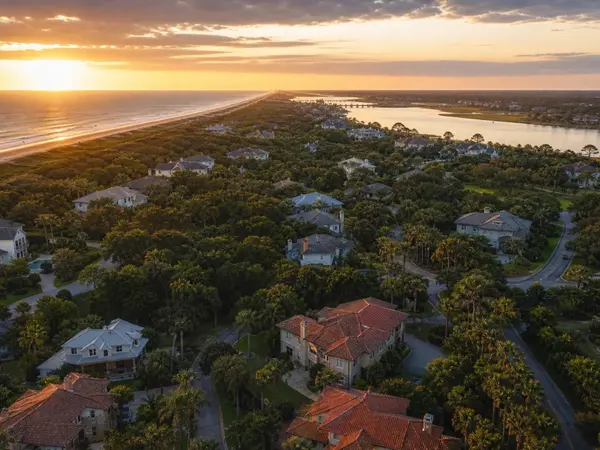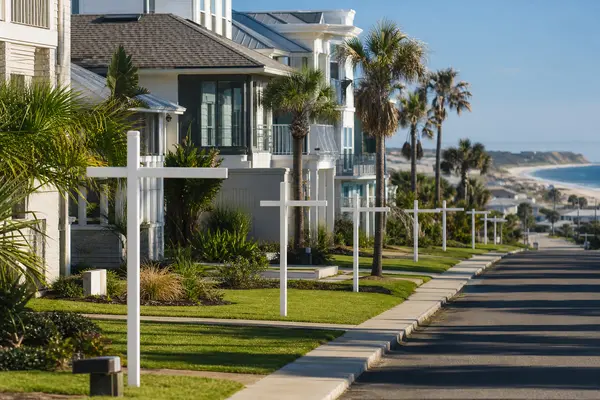
What Falling Prices in Hammock Beach Actually Signal

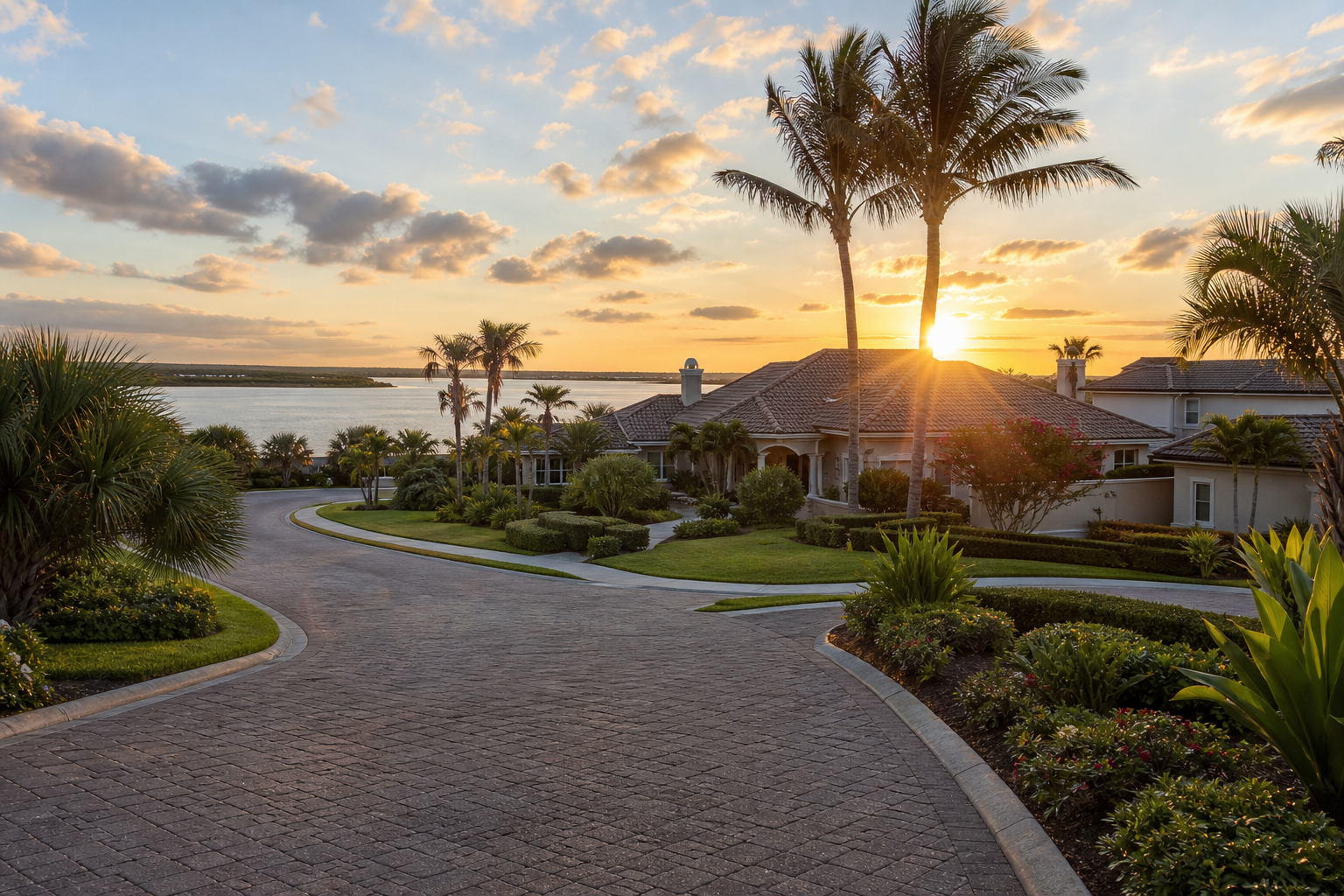
The market in Hammock Beach shows a lower median sale price and longer days on market, but those numbers likely reflect a shift in the mix of homes sold, more condos and villas closing, rather than luxury homes losing value. Small-volume neighborhoods require deeper analysis than a single headline figure.
What does the market in Hammock Beach actually tell buyers and sellers right now?
The market in Hammock Beach is showing a lower median sale price and longer days on market compared to a year ago, but those headline numbers almost certainly reflect a shift in which types of homes closed rather than a broad decline in luxury property values. In a small, resort-oriented community where a handful of condo closings can move the median significantly, a single statistic rarely tells the whole story.
Key Takeaways
- Recent local market data for the Hammock area shows a median sale price of $521,000 and a median of 49 days on market, based on approximately 121 homes sold in the trailing 90 days as of October 2026.
- In a low-volume luxury community like Hammock Beach, a year with more condo or villa closings and fewer large detached homes can push the median lower without any comparable home losing equivalent value.
- Days on market and price direction are separate indicators: they can, and often do, move in opposite directions, so a longer marketing period does not automatically signal that sellers must cut their price.
- Comparing median and average sale prices as though they measure the same thing is a common mistake; in small luxury markets, one high-value closing can swing the average sharply while leaving the median unchanged.
- The most reliable read on what your specific Hammock Beach property is worth comes from a closed-sale analysis filtered by property type, street, and condition, not a neighborhood-wide headline figure.
Why does the market in Hammock Beach show lower median prices when luxury homes still command high prices?
This is the question I get most often when buyers and sellers look at Hammock Beach numbers side by side. The short answer: the median is a measure of the middle sale in a given period. When the mix of what sold shifts, the median shifts with it, even if no individual home lost a dollar of value.
Hammock Beach is a resort-oriented community that includes condominiums, villas, and larger detached luxury homes. Those property types carry very different price points. A quarter where more condos and villas close than large detached homes will produce a lower median than a quarter dominated by oceanfront estate sales, even if every single home sold at or above its ask.
This is why I always tell clients: before you read a Hammock Beach median price as a signal of appreciation or depreciation, you need to know the property-type breakdown behind it. Without that filter, you are comparing apples to avocados and calling it a trend.
According to NAR research, luxury and resort-oriented segments nationally show wider median swings tied to volume and mix precisely because the sample sizes are small. Hammock Beach is a textbook example of that dynamic.
How reliable is a year-over-year median in a small luxury community?
Not very, on its own. When a neighborhood closes a relatively small number of homes in a year, a single cluster of condo sales can move the median by tens of thousands of dollars in either direction. That is not a market signal, it is a math outcome.
The more useful questions are: What did comparable homes sell for? How does the list-to-sale ratio look? Are sellers getting their ask, or are they negotiating down? Those metrics give you a real read on negotiating leverage and pricing power. The headline median gives you a starting point for a conversation, not a conclusion.
Before acting on any Hammock Beach median figure, I walk my clients through a closed-sale analysis filtered by property type, square footage, and street. That is the only way to know whether a number reflects your home specifically, or just the mix of what happened to close that quarter.
Does longer days on market in Hammock Beach mean sellers have to cut their price?
Not automatically. Days on market and price direction are separate indicators, and conflating them is one of the most common mistakes I see buyers and sellers make.
Consider the Flagler Beach market as a useful comparison. The Flagler Beach real estate market in 2026 has shown prices moving upward year over year while days on market also increased, two things that feel contradictory until you understand that a slower pace of sales does not erase underlying demand. Buyers are simply being more deliberate. That is not the same as being unwilling to pay.
Here is how the two areas compare based on recent local market data for the trailing 90 days as of October 2026:
| Area | Median Sale Price | Median Days on Market |
|---|---|---|
| the hammock | $521,000 | 49 |
| flagler beach | $500,000 | 56 |
Both areas are sitting at similar price levels, and both are showing marketing periods that reflect a more measured buyer pool, not a distressed one. As NAR's market data consistently shows, a rise in days on market at the luxury end of the price spectrum typically reflects buyer deliberation, not buyer absence.
What does a longer marketing period actually mean for a Hammock Beach seller?
It means pricing precision matters more than it did two years ago. When buyers have more time to look and more active listings to compare, an overpriced home does not just sit, it accumulates days on market that become a negotiating point in themselves. Buyers notice when a listing has been on for 60, 80, or 90 days, and they use that number.
The Flagler County Economic Development office publishes monthly economic snapshots that include housing indicators for the broader county, and those reports reinforce what I see on the ground: the market has not collapsed, but the days of pricing high and waiting for a bidding war are behind us in this cycle.
For sellers, the practical takeaway is this: a well-priced, well-presented Hammock Beach property still moves. The 121 closed sales in the trailing 90 days in the Hammock area confirm that buyers are active. The question is whether your listing is positioned to be one of those closings, or to watch them from the sidelines.
Your specific number depends on your home's condition, property type, street, and the timing of your listing. That is exactly the kind of analysis I run before we price anything. The CFPB's homeowner resources are a good starting point for understanding how market data should inform, but not replace, a personalized pricing conversation.
What buyers and sellers should actually do with this data
If you are a buyer watching Hammock Beach, the current market in Hammock Beach is worth taking seriously. More active listings (155 as of the most recent local data), a longer average marketing period, and a measured pace of sales all point to a negotiating environment that is more balanced than it was at the peak. That does not mean sellers are desperate, it means well-informed buyers have more room to ask questions and negotiate terms.
If you are a seller, the data is not alarming, but it is a clear signal that presentation and pricing strategy carry more weight than they did when inventory was thin and buyers were competing. The 42 new listings that came to market in just the last 30 days in this area mean your competition is real.
In either case, a single median figure is not a strategy. Every situation is different, and the only way to know what the numbers actually mean for your specific property is to run them with someone who knows this market at the street level.
I have worked this market for over seven years, and I have seen Hammock Beach numbers move in ways that looked alarming in a headline and turned out to be entirely explainable once you looked at the underlying closed-sale mix. I have also seen the reverse, numbers that looked stable until you filtered by property type and realized a specific segment was softening. That kind of read only comes from being in the data, not just reading it.
If you want to know what your Hammock Beach property is actually worth in this market, or what a specific listing is really priced at relative to comparables, I am happy to walk you through it. Schedule a consultation here and we will look at the real numbers together.
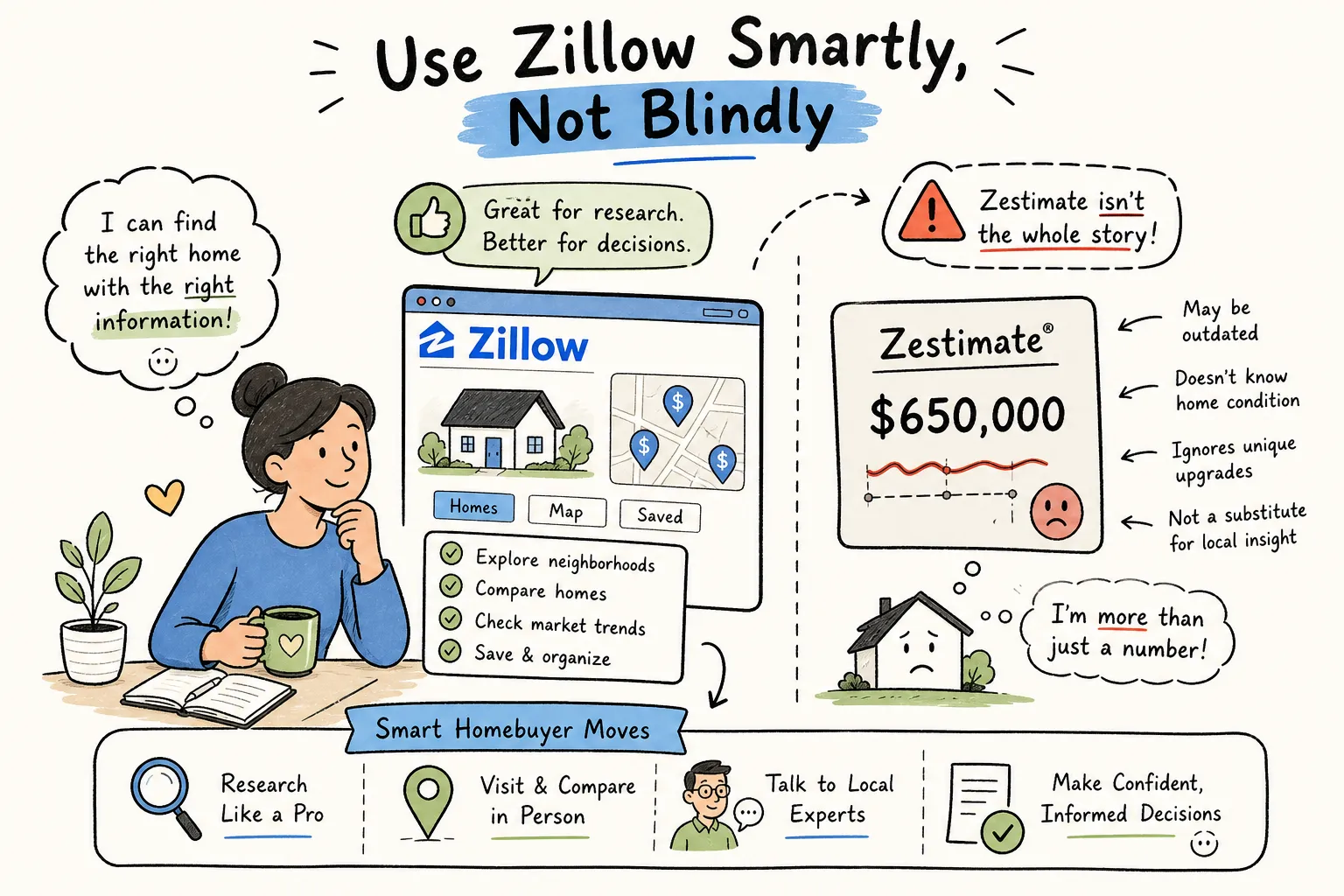
You can also read what past clients have said about working with me on Google and Zillow.
FAQ
Why did the Hammock Beach median sale price fall even though luxury homes still sell for high prices?
The median measures the middle sale in a given period, so when more lower-priced property types, condos and villas, close in a quarter than large detached homes, the median drops even if every home sold at full value. In a small luxury community, mix shift is almost always a bigger driver of median movement than actual price decline.
Is Hammock Beach actually becoming more affordable, or did the mix of homes sold change?
Mix shift is the more likely explanation. Without a verified breakdown of closed sales by property type for matched year-over-year periods, it is not possible to say that comparable luxury homes have become cheaper. A lower median in a low-volume market is a reason to look closer, not a conclusion about affordability.
How reliable is a year-over-year median in a small luxury community like Hammock Beach?
It is a useful starting point, but it is not reliable as a standalone signal. When a neighborhood closes a small number of homes in a year, a single cluster of lower-priced sales can move the median significantly without reflecting any change in what a specific home is worth. A property-type-filtered, street-level analysis is far more meaningful.
Why are Hammock Beach homes taking longer to sell in 2026?
Buyers in the luxury segment are being more deliberate, and inventory has increased, giving them more options to compare. A longer marketing period reflects a more balanced market, not a distressed one. The key distinction is whether a home is sitting because it is overpriced versus simply taking the time a measured luxury buyer needs to make a decision.
Does a longer days-on-market figure mean sellers must reduce their prices?
Not automatically. Days on market and price direction are separate indicators and can move in opposite directions. What a longer marketing period does mean is that pricing precision matters more: an overpriced listing accumulates days on market that buyers notice and use as a negotiating point, so getting the price right from day one is more important than it was in a faster-moving market.
How does the Hammock area compare with Flagler Beach in 2026?
Based on recent local market data for the trailing 90 days, the Hammock area shows a median sale price of $521,000 and a median of 49 days on market, while Flagler Beach shows a median of $500,000 and 56 days on market. Both markets are active, with buyers taking a measured approach in each.
Equal Housing Opportunity. This article is general market commentary for informational purposes only and does not constitute legal, tax, or financial advice. Verify your own figures with your closing agent, tax advisor, or lender before making any transaction decisions.
Categories
Recent Posts